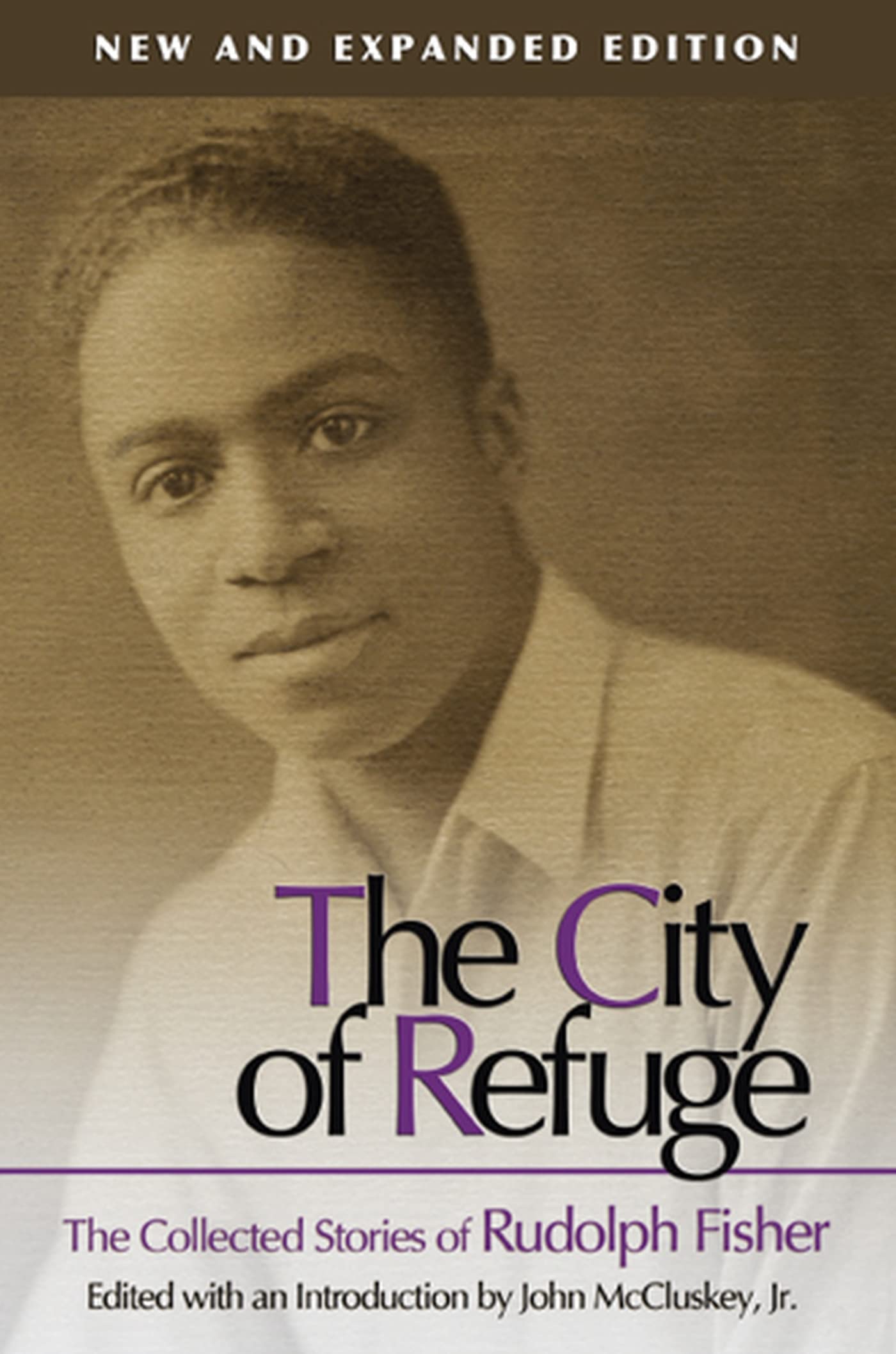
The City of Refuge [New and Expanded Edition]: The Collected Stories of Rudolph Fisher (Volume 1)
$35.00
by Rudolph Fisher



One of the premier writers of the Harlem Renaissance, Rudolph Fisher wrote short stories depicting the multifaceted black urban experience that are still acclaimed today for their humor, grace, and objective view of Harlem life. Through his words, wrote the New York Times Book Review , “one feels, smells, and tastes his Harlem; its people come alive and one cares about them.” A definitive collection of Fisher’s short stories, The City of Refuge offers vibrant tales that deal with the problems faced by newcomers to the city, ancestor figures who struggle to instill a sense of integrity in the young, problems of violence and vengeance, and tensions of caste and class. This anthology has now been expanded to include seven previously unpublished stories that take up such themes as marital infidelity and passing for black and also relate the further adventures of Jinx and Bubber, the comic duo who appeared in Fisher’s two novels. This new edition also includes two unpublished speeches and the popular article “The Caucasian Storms Harlem,” describing the craze for black music and dance. John McCluskey’s introduction has been updated to place the additional works within the context of Fisher’s career while situating his oeuvre within the broader context of American writing during the twenties. Fisher recognized the dramatic and comic power in African American folklore and music and frequented Harlem’s many cabarets, speakeasies, and nightclubs, and at the core of his work is a strong regard for music as context and counterpoint. The City of Refuge now better captures the sounds of the city experience by presenting all of Fisher’s known stories. It offers a portrait of Harlem unmatched in depth and range by Fisher’s contemporaries or successors, celebrating, as Booklist noted, “the complexity of black urban life in its encounter with the dangers and delights of the city.” This expanded edition adds new perspectives to that experience and will enhance Fisher’s status for a new generation of readers. Rudolph Fisher (1897–1934), a Phi Beta Kappan, was a dynamic force during the Harlem Renaissance, participating as an author, orator, and musician while also working full-time as a physician. He was the author of two novels, The Walls of Jericho and The Conjure Man Dies ,as well as numerous short stories, book reviews, and scientific articles. John McCluskey, Jr. , is Professor of African American and African Diaspora Studies at Indiana University in Bloomington and author of Look What They Done to My Song, Mr. America’s Last Season Blues, and Black Men Speaking . The City of Refuge The Collected Stories of Rudolph Fisher (New and Expanded Edition) By John McCluskey Jr. University of Missouri Press Copyright © 2008 The Curators of the University of Missouri All rights reserved. ISBN: 978-0-8262-1812-4 Contents Preface, Introduction, I. The Quest, The City of Refuge, Ringtail, The South Lingers On, Ezekiel, Ezekiel Learns, The Promised Land, Guardian of the Law, Miss Cynthie, II. The New Land, High Yaller, Dust, The Backslider, Fire by Night, Blades of Steel, Common Meter, John Archer's Nose, III. The Unpublished Stories, The Lost Love Blues, The Man Who Passed, Skeeter, Across the Airshaft, The Lindy-Hop, One Month's Wages, A Perfect Understanding, Appendix, Works of Rudolph Fisher, CHAPTER 1 THE CITY OF REFUGE I Confronted suddenly by daylight, King Solomon Gillis stood dazed and blinking. The railroad station, the long, white-walled corridor, the impassable slot-machine, the terrifying subway train — he felt as if he had been caught up in the jaws of a steam-shovel, jammed together with other helpless lumps of dirt, swept blindly along for a time, and at last abruptly dumped. There had been strange and terrible sounds: "New York! Penn Terminal — all change!" "Pohter, hyer, pohter, suh?" Shuffle of a thousand soles, clatter of a thousand heels, innumerable echoes. Cracking rifle shots — no, snapping turnstiles. "Put a nickel in!" "Harlem? Sure. This side — next train." Distant thunder, nearing. The screeching onslaught of the fiery hosts of hell, headlong, breathtaking. Car doors rattling, sliding, banging open. "Say, wha'd'ye think this is, a baggage car?" Heat, oppression, suffocation — eternity — "Hundred 'n turdy-fif' next!" More turnstiles. Jonah emerging from the whale. Clean air, blue sky, bright sunlight. Gillis set down his tan cardboard extension case and wiped his black, shining brow. Then slowly, spreadingly, he grinned at what he saw: Negroes at every turn; up and down Lenox Avenue, up and down 135th Street; big, lanky Negroes, short, squat Negroes; black ones, brown ones, yellow ones; men standing idle on the curb, women, bundle-laden, trudging reluctantly homeward, children rattle-trapping about the sidewalks; here and there a white face drifting along, but Negroes predominantly, overwhelmingly everywhere. There was